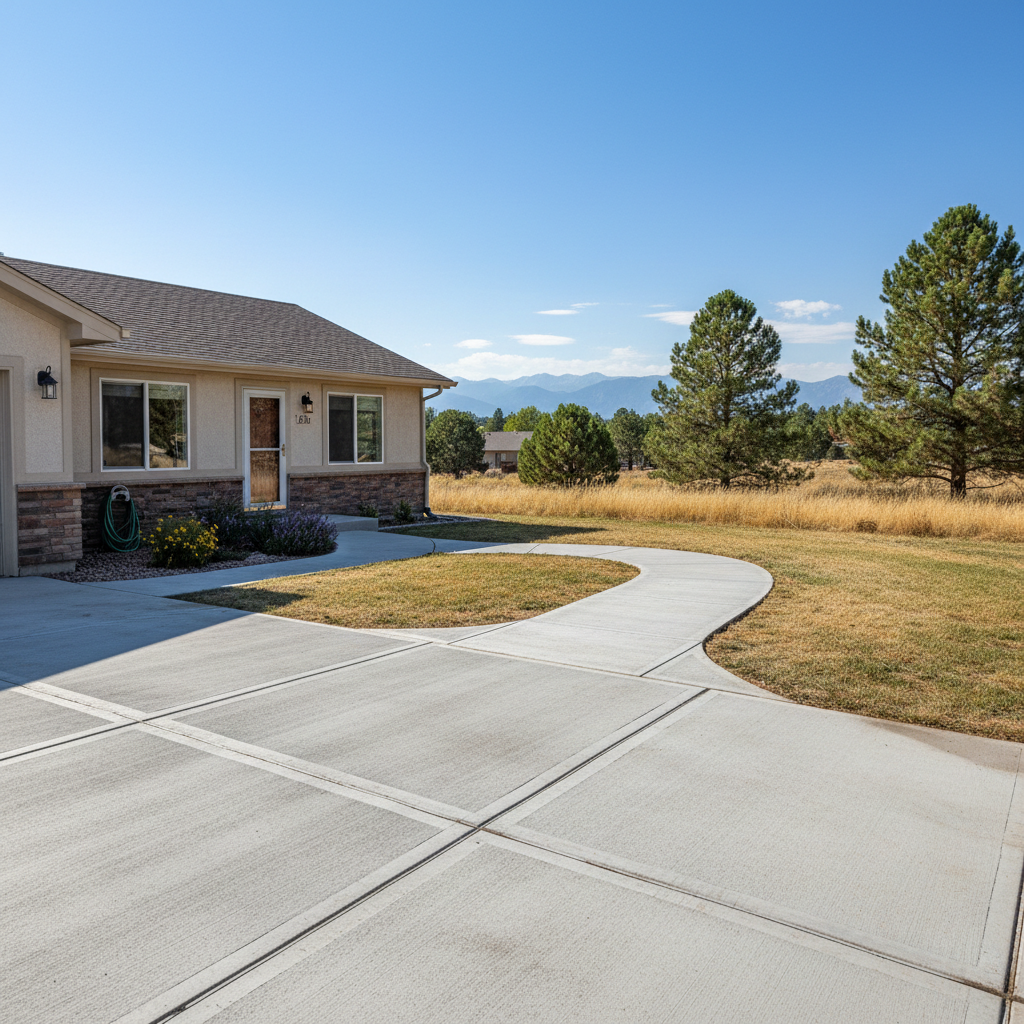
Alright, let's talk about concrete repair costs here in Westminster. Nobody wants to spend money on fixing something that's already there, but ignoring a crumbling driveway or a trip-hazard sidewalk is just asking for bigger, more expensive problems down the road. So, what's it going to cost you?
You've probably heard the classic, 'it depends.' And yeah, it does. But I'm not going to leave you hanging with just that. I'm going to give you some real numbers, based on what I see every day working on homes and businesses around Westminster, from the older neighborhoods near City Park to the newer builds out by Standley Lake.
What Really Drives the Price Tag?
There are a few big factors that swing the cost of concrete repair. Understanding these helps you understand why one job might be $500 and another $5,000.
- The Type of Repair: Are we talking about a small crack, a sunken slab, or a completely busted-up section that needs to be torn out and replaced? Each type of repair has its own methods and material costs. Crack filling is usually the cheapest, slab jacking (also called concrete lifting or mudjacking/polyjacking) is mid-range, and full demo and replacement is the most expensive.
- Size and Scope: This one's a no-brainer. A 10-foot crack costs less to fix than a 50-foot one. Repairing a small patio section is cheaper than lifting a whole driveway. The square footage or linear footage of the repair area is a primary cost driver.
- Accessibility: Can we easily get our equipment to the area? If we're trying to fix a backyard patio that's only accessible through a narrow gate, that's going to take more time and effort than a front driveway right off the street. Tight spaces mean more manual labor and less reliance on machinery, which adds to the cost.
- Underlying Issues: Sometimes, the concrete isn't the only problem. If your slab sunk because of poor drainage, expansive clay soils (which we've got plenty of around here in Westminster), or a leaky pipe, we'll need to address that too. Fixing the root cause prevents the problem from coming back, but it adds to the overall project cost.
- Materials and Techniques: Basic crack filler is one thing, but if you need specialized epoxy injections for structural cracks, or if we're using high-density polyurethane foam for slab lifting instead of traditional cement slurry, the material costs will differ. Polyurethane foam, for instance, is often more expensive per cubic foot than mudjacking slurry, but it's lighter, stronger, and cures faster.
Typical Cost Ranges You Can Expect
Okay, let's get down to some actual numbers. Remember, these are ranges, and your specific project will fall somewhere within them, or sometimes outside if it's a really unique situation.
- Small Crack Repair (Hairline to 1/2 inch wide): For basic sealing and filling of minor cracks, you're usually looking at $200 to $600. This is often a minimum service charge for a contractor to even show up, because even a small job has overhead.
- Slab Jacking / Concrete Lifting (Polyjacking or Mudjacking): This is for sunken concrete slabs like driveways, sidewalks, or patio sections. This is a great option if the concrete is still in good shape but has just settled. You're generally looking at $600 to $2,500 for smaller areas (like a few sidewalk panels or a small patio section), and $2,500 to $6,000+ for larger areas like a significant portion of a driveway or a garage floor. The cost per square foot for lifting usually ranges from $3 to $8, depending on the volume of material needed and the complexity.
- Partial Concrete Replacement: If a section is too far gone – severely cracked, spalled, or crumbling – it needs to be cut out and replaced. This involves demolition, hauling away debris, preparing the sub-base, pouring new concrete, and finishing it. For a typical small section, say 25-50 square feet, you might be looking at $700 to $1,500. For larger sections, say 100-200 square feet, expect $1,500 to $4,000+. The cost per square foot for replacement usually runs $8 to $18, but can go higher for complex jobs or decorative finishes.
- Resurfacing (Overlay): If your concrete is structurally sound but looks terrible – stained, pitted, or lightly spalled – a concrete overlay can give it a fresh look. This is more about aesthetics than structural repair, but it's an option. Costs typically range from $4 to $10 per square foot, depending on the material and finish.
What Should a Good Quote Include?
When you get a quote from Horizon Concrete Solutions, or any reputable contractor, it should be clear and detailed. Don't just accept a number on a napkin. Here's what you should expect:
- Detailed Description of Work: Exactly what's being repaired, the method (e.g., polyjacking, saw-cut and replace), and the areas involved.
- Material Specifications: What kind of concrete, repair materials, or foam will be used.
- Prep Work: Will they prepare the sub-base? Address drainage?
- Cleanup and Haul-Away: Who's responsible for removing debris and cleaning up the site?
- Timeline: An estimated start and completion date.
- Warranty: What kind of guarantee do they offer on their work? A good contractor stands behind their repairs.
- Total Cost: A clear, itemized breakdown if possible, or at least a lump sum that covers everything discussed.
How to Avoid Overpaying for Concrete Repair
Nobody wants to get ripped off, especially on something as essential as concrete. Here's my advice:
- Get Multiple Quotes: Always get at least three quotes from different, reputable Westminster concrete contractors. This isn't just about finding the cheapest price; it's about comparing scopes of work and understanding fair market value.
- Check References and Reviews: See what other homeowners in Westminster are saying about their work. Online reviews (Google, Yelp, etc.) and direct references are invaluable.
- Understand the 'Why': Don't just ask 'how much?' Ask 'why?' Why is this the best repair method? Why does it cost this much? A good contractor will explain their process clearly.
- Don't Always Go for the Cheapest: The lowest bid often means corners are being cut – cheaper materials, less experienced labor, or incomplete work. Concrete repair is an investment; you want it done right the first time.
- Ask About Warranties: A solid warranty on both materials and labor shows confidence in their work. For slab lifting, a warranty against settling is crucial.
- Address the Root Cause: If your concrete is failing due to poor drainage or soil issues, fixing just the concrete without addressing the underlying problem is a waste of money. Make sure the contractor considers the 'why' behind the damage.
Look, concrete repair isn't glamorous, but it's essential for the safety and value of your property. By understanding what goes into the cost and asking the right questions, you'll be able to make an informed decision and ensure you're getting a fair deal for quality work here in Westminster.