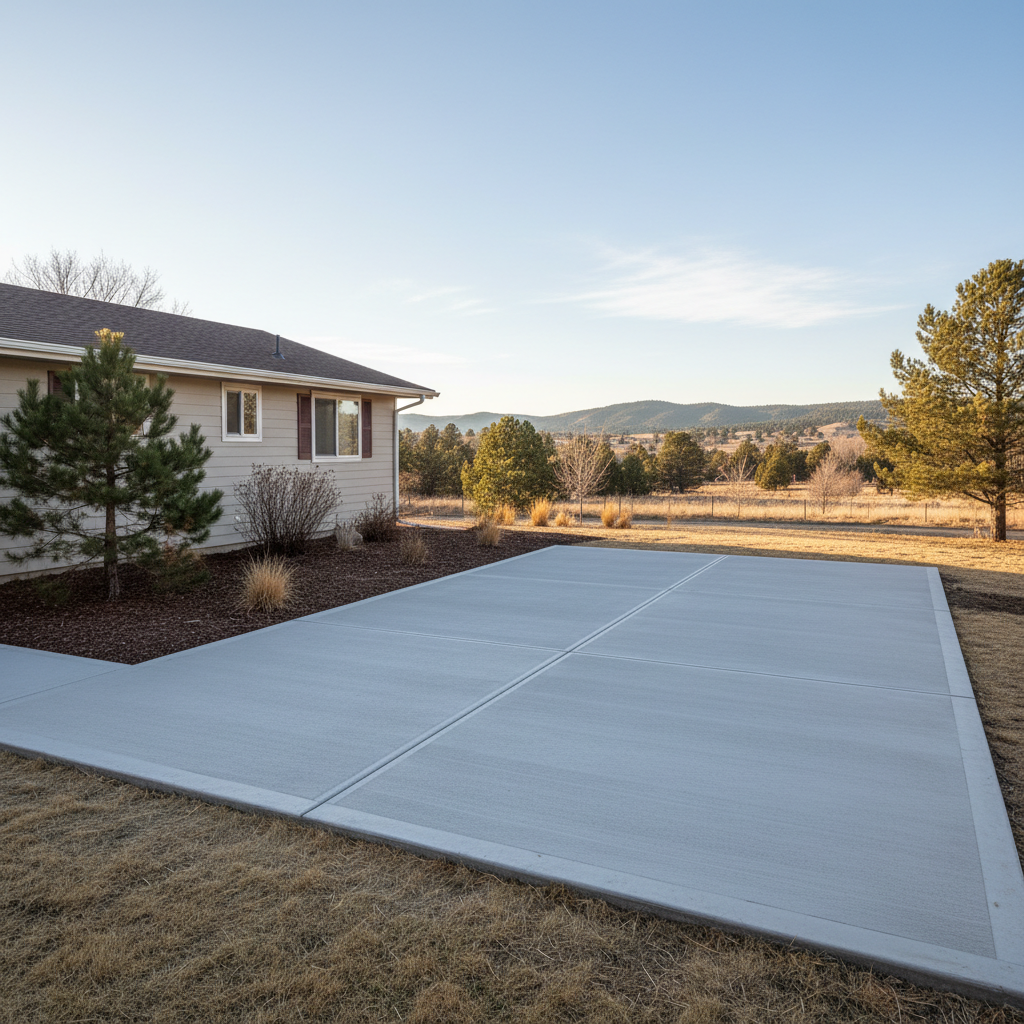
Alright, let's talk concrete. You're probably looking at a new driveway, patio, or maybe a walkway around your Westminster home, and the first thing on your mind is, "What's this going to set me back?" It's a fair question, and honestly, it's not always straightforward. But I'm going to break it down for you, based on what I see every day out here.
What Drives Concrete Pricing Up (or Down)?
You want a number, I get it. But concrete isn't like buying a gallon of milk; there are a lot of moving parts. Here's what really affects the price:
- Project Size & Complexity: This is probably the biggest one. A simple 10x10 slab is way different from a winding decorative walkway with multiple turns and steps. The bigger and more intricate the job, the more labor, materials, and time it takes. We usually price by the square foot, but that rate drops a bit on larger, simpler projects because of economies of scale.
- Concrete Type & Mix: Standard gray concrete is your most affordable option. But if you're looking for something stronger, faster-setting, or with special additives for durability (especially important with our freeze-thaw cycles here in Colorado), that's going to cost more per yard.
- Site Preparation: This is huge, and often overlooked. Is the ground already level? Do we need to excavate old concrete or soil? Are there roots, rocks, or other obstacles? Good site prep is critical for a long-lasting slab, and it takes time and equipment. If we're digging out an old, cracked driveway, that demo and haul-away adds to the cost.
- Reinforcement: Rebar (steel reinforcing bars) or wire mesh isn't always optional; it's often essential, especially for driveways or heavy-use areas. It prevents cracking and adds strength. Expect to pay more for jobs that need robust reinforcement.
- Finish & Aesthetics: Plain broom-finish concrete is the cheapest. Want stamped concrete to look like flagstone or brick? Expect a significant jump. Exposed aggregate, colored concrete, or special sealants also add to the cost because they require more specialized materials and skilled labor.
- Accessibility: Can a concrete truck easily back right up to the pour site? Or do we need to wheelbarrow it in or use a pump truck because it's in a tight backyard? Difficult access means more labor and potentially equipment rental, which increases the price.
Typical Concrete Cost Ranges in Westminster
Okay, let's get to some actual numbers. Remember, these are general ranges for Westminster and the surrounding areas, and they can fluctuate with material costs and demand. These are typically for a 4-inch thick slab, which is standard for most residential applications.
- Plain Broom Finish (Patios, Walkways): You're usually looking at $8 to $12 per square foot. This is for a basic, functional slab with good site prep, proper grading, and a standard broom finish.
- Driveways (Broom Finish, Reinforced): Because driveways need to handle vehicle weight and our tough Colorado weather, they require more robust reinforcement (rebar) and often a slightly thicker pour. Expect $10 to $15 per square foot.
- Stamped Concrete (Patios, Walkways): This is where things get pricier due to the specialized labor and materials. Depending on the pattern and color complexity, you could be in the $15 to $25+ per square foot range. Some highly intricate designs with multiple colors and patterns can go even higher.
- Concrete Removal & Haul-Away: If we're tearing out old concrete, budget an additional $2 to $5 per square foot for removal and disposal. It's dirty, heavy work.
So, for a 400 square foot broom-finish patio, you might be looking at $3,200 to $4,800. A 500 square foot stamped driveway could easily be $7,500 to $12,500 or more. These are just ballparks, but they give you a starting point.
What Should Be Included in Your Quote?
When you get a quote, don't just look at the bottom line. A good quote from a reputable company like Horizon Concrete Solutions will be detailed. Here's what you should expect to see:
- Square Footage: Clearly stated area of the concrete pour.
- Thickness: Usually 4 inches for patios/walks, 4-6 inches for driveways.
- Concrete Mix: Type and strength (e.g., 3500 psi).
- Reinforcement: Specifics on rebar size/spacing or wire mesh.
- Excavation & Grading: What's included for site prep.
- Forming: Materials and labor for creating the pour boundaries.
- Pour & Finish: Labor for placing, screeding, and finishing the concrete.
- Control Joints: Saw cuts or hand-tooled joints to control cracking.
- Sealing: If a sealer is applied, it should be listed.
- Cleanup & Haul-Away: What debris removal is covered.
- Permits: Who is responsible for pulling necessary permits (often the homeowner, but a good contractor will guide you).
Be wary of quotes that are just a single line item. You need to know what you're paying for.
How to Avoid Overpaying for Concrete
Nobody wants to get ripped off. Here's my advice:
- Get Multiple Quotes: This sounds obvious, but it's the best way to gauge fair pricing. Get at least three detailed quotes.
- Check References & Reviews: See what other folks in Westminster are saying. A company with a long track record of good work is worth paying a little more for.
- Ask Questions: Don't be afraid to ask about anything you don't understand in the quote. A good contractor will be happy to explain it.
- Don't Always Go for the Lowest Bid: The cheapest bid often means corners are being cut – maybe less rebar, thinner concrete, or less experienced labor. Concrete is a long-term investment; you don't want to redo it in five years because someone skimped on the foundation.
- Understand the Scope: Make sure every quote is for the exact same scope of work. If one contractor is including extensive drainage work and another isn't, their prices won't be comparable.
Look, concrete isn't cheap, but when it's done right, it adds real value and curb appeal to your home for decades. Do your homework, ask the right questions, and you'll get a solid job at a fair price.