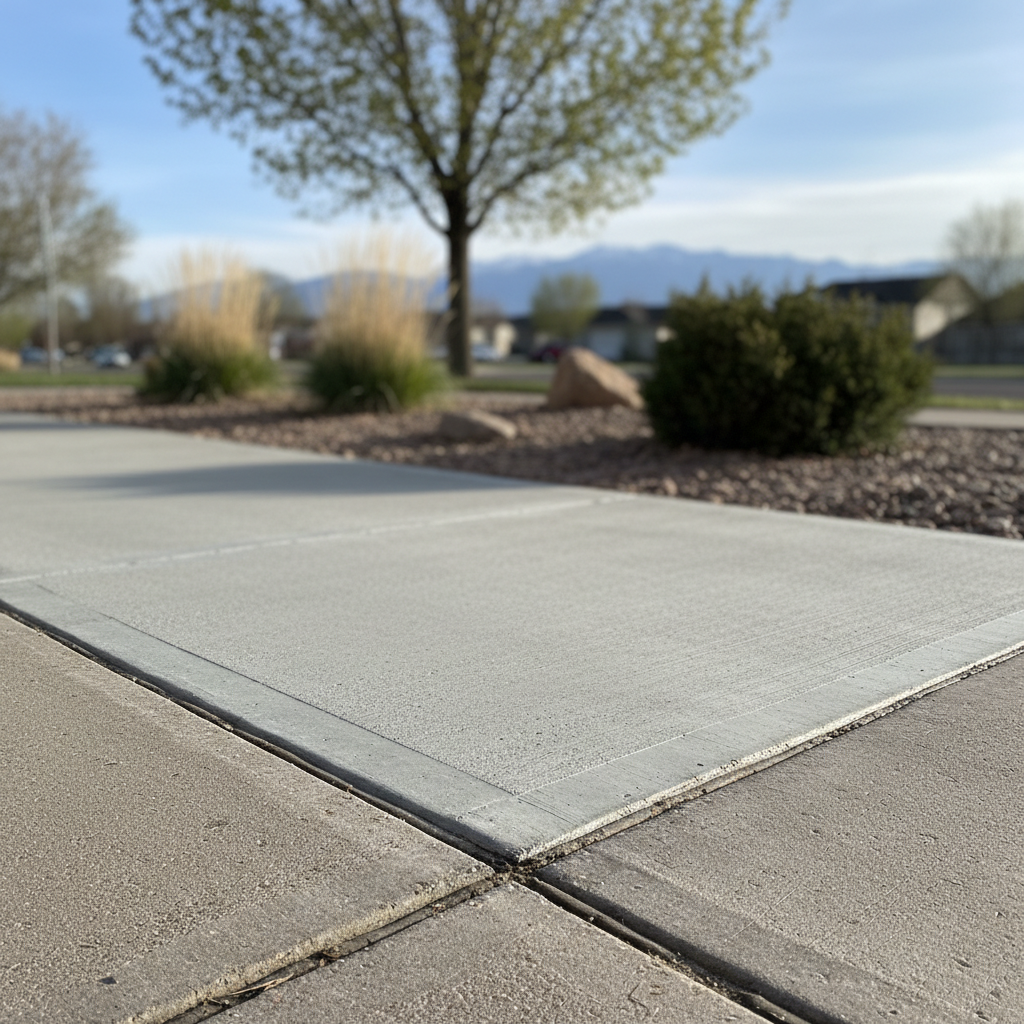
Concrete repair can feel like a mystery, especially when you're looking at a cracked driveway or a sinking patio. I get a lot of questions from folks right here in Westminster, and it's usually the same handful of concerns that pop up. So, I figured I'd lay out some honest answers to the most common ones I hear. No fluff, just what you need to know.
What's the difference between concrete lifting and replacing, and when do I need which?
This is probably the biggest question I get. Concrete lifting, also known as mudjacking or polyjacking (we mostly do polyjacking these days, it's cleaner and lasts longer), is when we inject a material under your existing slab to raise it back to its original level. Think of it like giving your concrete a shot in the arm to lift it up. You need lifting when your concrete is uneven, sinking, or creating tripping hazards, but the slab itself is still in pretty good shape – not too cracked up, just settled.
Replacing, on the other hand, means we tear out the old concrete, haul it away, and pour new stuff. You need replacement when the concrete is severely cracked, crumbling, spalling (flaking on the surface), or if it's just old and worn out beyond repair. If your driveway looks like a jigsaw puzzle or a moonscape, lifting isn't going to cut it. It's usually more expensive and takes longer, but sometimes it's the only real solution.
How long does a concrete repair typically last?
That really depends on the type of repair and what caused the problem in the first place. If we're talking about polyjacking to lift a settled slab, and we address the underlying issue like poor drainage, that repair can easily last 10-15 years, sometimes more. We've done jobs in areas like Legacy Ridge where the soil can be really expansive, and if we get it right, it holds for a long time. For crack repairs, if it's a minor surface crack and we seal it properly, it can last for years. But if it's a structural crack due to ongoing foundation movement, that crack might reappear, even if we've done our best work. A good repair should always aim to address the root cause, not just the symptom.
Can I just patch small cracks myself? What's the risk if I don't?
For very small, hairline cracks – I'm talking about ones that are barely wider than a credit card – you can certainly try patching them with a good quality concrete caulk or sealant from the hardware store. It's not going to be a professional-grade repair, but it can help prevent water intrusion for a while. The risk of not addressing cracks, even small ones, is that water gets in. When that water freezes and thaws (which happens a lot here in Westminster during winter), it expands, making the crack bigger. This freeze-thaw cycle is brutal on concrete. Eventually, those small cracks become big cracks, and then you're looking at a much more expensive repair or even replacement. Don't let a little crack turn into a big headache.
What causes concrete to sink or crack in the first place?
There are a few main culprits. One of the biggest around here is soil settlement. Our soils can be pretty active, especially clay-rich soils that expand when wet and shrink when dry. If the ground under your concrete isn't properly compacted or if there's a lot of moisture fluctuation, the soil can shift, and your concrete will follow. Poor drainage is another huge factor; if water is constantly pooling near your slab, it erodes the soil underneath. Tree roots can also push up slabs, and sometimes it's just poor installation – not enough base material or improper mixing of the concrete itself. We see it all the time, and identifying the cause is the first step to a lasting repair.
Is concrete repair messy? How long will it disrupt my property?
Compared to a full replacement, concrete lifting is much less disruptive. With polyjacking, we drill small, dime-sized holes, inject the material, and then patch the holes. It's a pretty clean process. You'll have our truck and equipment on site, but we're usually in and out within a day for most residential jobs. You can typically use the repaired area within a few hours. Replacing concrete, on the other hand, is definitely messier. There's demolition, dust, noise, and then the new concrete needs time to cure – usually a few days before light foot traffic and a week or more before vehicle traffic. We always try to minimize disruption, no matter the job, and at Horizon Concrete Solutions, we make sure to clean up thoroughly.
When is it too cold to do concrete repair in Westminster?
That's a great question for Colorado. For polyjacking, we can typically do it year-round as long as the ground isn't completely frozen solid, which usually means temperatures consistently above freezing for a few days. The material we use performs well in a wide range of temperatures. For pouring new concrete or doing extensive patching, it's a different story. Concrete needs to cure properly, and cold temperatures slow that process down significantly. Below 40 degrees Fahrenheit, you start needing special cold-weather admixtures and blankets to protect the concrete, which adds to the cost and complexity. We generally prefer to pour new concrete when temperatures are consistently above freezing, ideally between 50-70 degrees. It just makes for a better, stronger product.