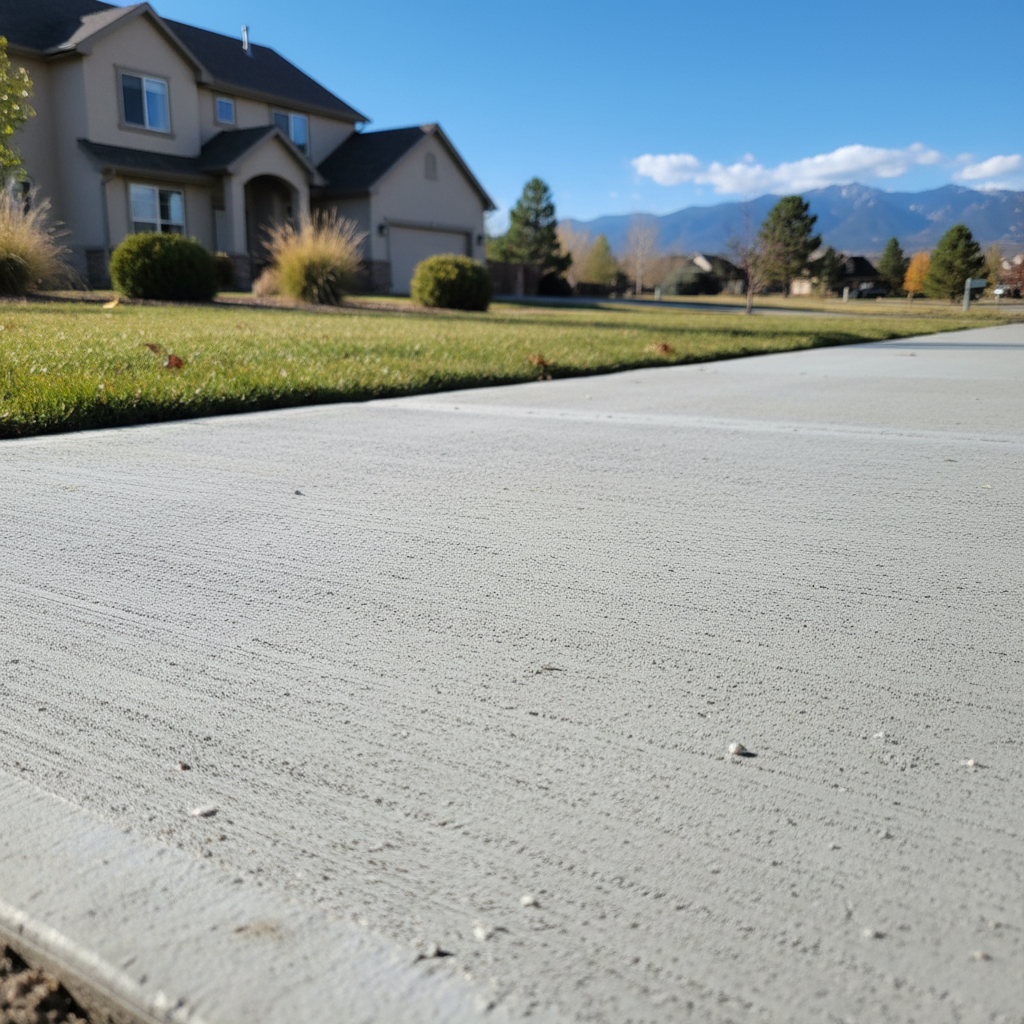
Your concrete sidewalks really take a beating, don't they? Between our Colorado weather, constant foot traffic, and sometimes even those pesky tree roots, it's no wonder folks in Westminster have so many questions about keeping them in good shape. I've been pouring and repairing concrete around here for years, and trust me, I've heard it all. So, let's dive into some of the most common questions I get about concrete sidewalks.
Why do concrete sidewalks crack, even brand-new ones?
This is probably the number one question I hear, hands down. Concrete cracks for a bunch of reasons, and it's not always a sign of shoddy work. First off, concrete shrinks as it dries. We put in control joints – those lines you see cut into the concrete – to give it specific, planned places to crack, so it doesn't just split randomly. But even with those, you can still get what we call 'random cracking.' Temperature changes play a huge role too. Our freeze-thaw cycles here in Westminster? They're brutal. Water gets into tiny pores, freezes, expands, and then thaws, creating pressure that eventually leads to cracks. Heavy loads, like a delivery truck driving over your sidewalk, or even tree roots pushing up from underneath, can also cause issues. Sometimes, it's the sub-base – what's underneath the concrete – if it wasn't properly compacted, it can settle unevenly, and the concrete above it will crack. Makes sense, right?
What's the difference between a control joint and an expansion joint?
Good question, and people often mix these up. A control joint, as I mentioned, is a saw cut or a groove we put into the fresh concrete. Its job is to create a weakened plane so that when the concrete inevitably shrinks and cracks, it does so in a straight, predictable line, usually every 4-5 feet on a sidewalk. This keeps the cracks neat and less noticeable. An expansion joint is different. It's a full-depth separation between concrete slabs, usually filled with a flexible material like asphalt or fiberboard. You'll often see these where a sidewalk meets a driveway, or where it runs right up against a building foundation. Their purpose? To let the concrete expand and contract freely with temperature changes without pushing against other structures or itself, which would cause buckling or spalling. Think of it as a little buffer zone.
How long should a concrete sidewalk last in Westminster?
If it's installed right and you give it a little care, a concrete sidewalk can easily last 20 to 30 years, sometimes even longer. I've seen some sidewalks around the older parts of Westminster, like near Historic Westminster, that are still holding up surprisingly well after decades. A lot depends on the quality of the mix, the preparation of the sub-base, proper drainage, and how well it's maintained. If you're constantly driving heavy vehicles over it, or if you're using harsh de-icers every winter, you're going to shorten its lifespan, no doubt. But a good, strong slab, poured on a solid base, will serve you for a long, long time.
Can I repair a cracked sidewalk, or do I need to replace it?
It depends entirely on the crack. For minor, hairline cracks, or even slightly wider ones that aren't causing trip hazards, you can often get away with a repair. We use special crack fillers and sealants that can prevent water from getting in and making the problem worse. If the crack is wide, if the concrete is spalling (flaking apart), or if one section has lifted significantly creating a trip hazard, then repair might not be enough. Sometimes, if the damage is localized to just one or two panels, we can simply remove and replace those sections. But if the entire sidewalk is a mess of cracks, uneven sections, or widespread deterioration, then a full replacement is usually the more cost-effective and safer option in the long run. It's always best to have someone like us at Horizon Concrete Solutions take a look and give you an honest assessment.
What's the deal with uneven sidewalk sections?
Uneven sections, where one slab is higher or lower than its neighbor, are usually caused by movement underneath. This could be due to soil settlement, especially with our expansive clay soils here that can swell and shrink with moisture changes. Tree roots are another big culprit; they grow under the slab and push it up. Water washing away the soil underneath (erosion) can also cause sections to sink. These uneven sections are a big safety concern because they're tripping hazards, of course. Sometimes, we can fix these with a process called 'mudjacking' or 'slab jacking,' where we pump a slurry under the slab to lift it back into place. Other times, if the underlying issue is severe, replacement might be necessary.
How can I prevent my sidewalk from cracking or becoming uneven?
Prevention is key! First, make sure you've got good drainage around your sidewalks. Water pooling next to them can lead to erosion or freeze-thaw damage. Avoid planting large trees too close to the sidewalk, or if you do, pick species with less aggressive root systems. Don't drive heavy vehicles over your sidewalks unless they're specifically designed for it. When it snows, use a plastic shovel and be mindful of de-icers. Products containing ammonium nitrates or sulfates can be really damaging to concrete. Stick to calcium chloride or rock salt sparingly, or better yet, just good old sand for traction. Sealing your concrete every few years can also help protect it from moisture penetration and chemical damage.