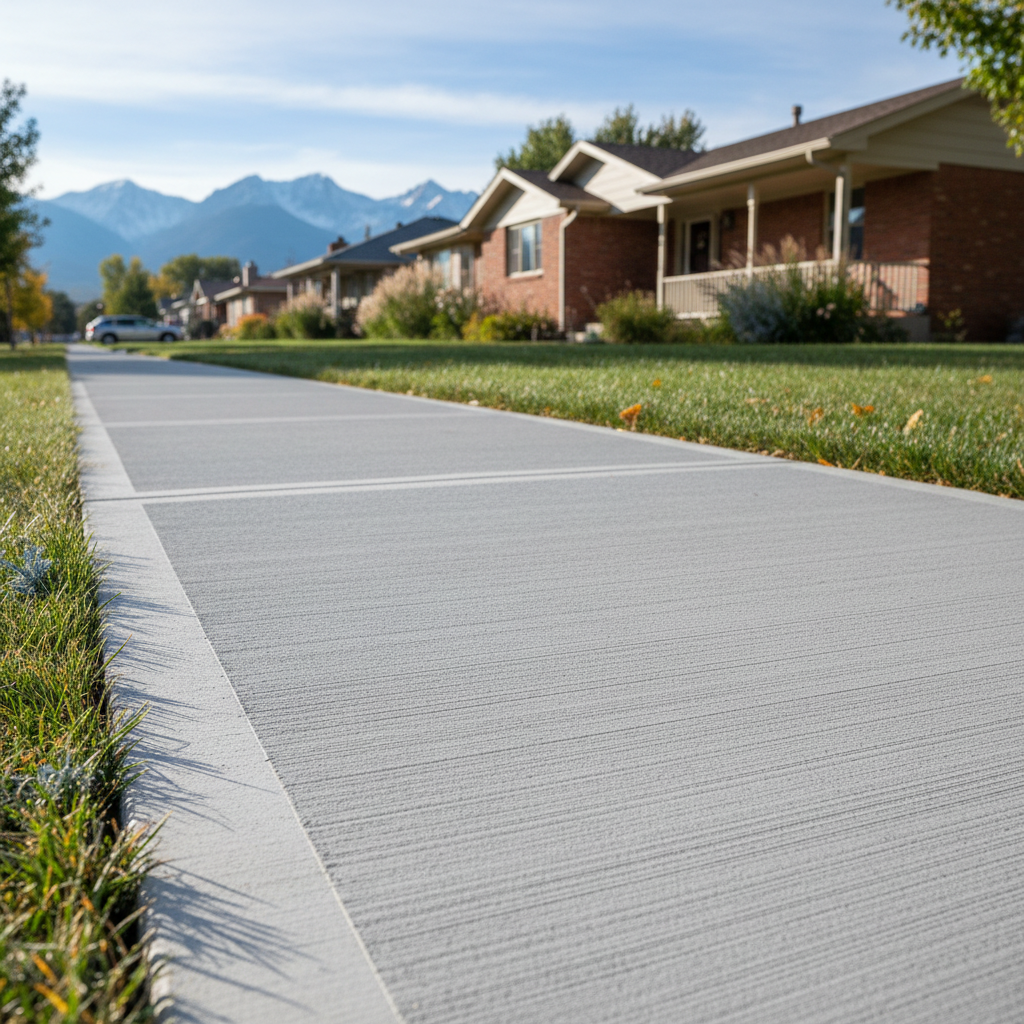
Your sidewalk isn't just a path; it's a critical part of your home's safety and curb appeal. And let's be honest, in Westminster, with our freeze-thaw cycles and expansive soils, those sidewalks take a beating. I get a lot of questions about them, so I figured I'd tackle the most common ones right here.
How long should a new concrete sidewalk last?
A properly installed concrete sidewalk, done right the first time, should easily last you 20 to 30 years, sometimes even longer. That's assuming a few things, though. It needs a good, stable base underneath it – no shortcuts there. The concrete mix itself has to be the right strength for our climate, and it needs to be poured and cured correctly. If you skip on any of those steps, you'll see problems pop up a lot sooner than you'd like. We're talking about things like proper expansion joints to handle our temperature swings, and making sure the subgrade is compacted well, especially in areas with clay soils like we often find around Westminster.
What causes sidewalks to crack or heave?
Oh man, this is a big one, especially around here. The main culprits are usually pretty consistent. First, you've got our good old Colorado weather. Those extreme temperature fluctuations, going from freezing cold to warm in a single day, cause the concrete to expand and contract. If there aren't enough expansion joints, or they're not placed correctly, that stress has to go somewhere, and it often results in cracks. Then there's the soil. We've got a lot of expansive clay soils in Westminster. When that clay gets wet, it swells; when it dries out, it shrinks. This constant movement underneath your sidewalk can lift sections (heaving) or cause it to settle unevenly, leading to cracks. Tree roots are another common offender. As trees mature, their roots grow, and they'll push up anything in their way, including your sidewalk. Lastly, improper installation – a weak base, bad drainage, or a poor concrete mix – will definitely lead to premature cracking and heaving.
Do I need a permit to replace my sidewalk in Westminster?
Yep, you absolutely do. For any significant concrete work on your property, especially if it's impacting public right-of-way or involves removing and replacing large sections, the City of Westminster requires a permit. This isn't just bureaucracy; it's to make sure the work meets safety standards and local codes. You don't want to get halfway through a project only to have the city shut it down because you didn't pull the right paperwork. It's always best to check with the city's permitting office directly or have your contractor handle it. At Horizon Concrete Solutions, we always make sure all the necessary permits are in place before we even think about breaking ground.
How important is proper drainage around my sidewalk?
It's incredibly important, probably more than most homeowners realize. Water is concrete's silent enemy. If water is constantly pooling on or around your sidewalk, it's going to cause problems. For one, it can seep underneath and saturate the soil, leading to the expansive soil issues I just talked about. In winter, that standing water will freeze and expand, putting immense pressure on the concrete. This freeze-thaw cycle is a major contributor to spalling (the surface flaking off) and structural cracks. Good drainage means your sidewalk should have a slight slope away from your house and any structures, directing water off and away. If you've got areas where water consistently sits, that's a red flag you need to address.
Can I just patch a broken section, or do I need to replace the whole thing?
That really depends on the extent of the damage. For small, isolated cracks or minor spalling, a patch might be a temporary fix. But here's the thing: patches rarely match perfectly, and they often don't address the underlying cause of the damage. If you've got significant heaving, wide cracks, multiple broken sections, or extensive spalling, a patch is just putting a band-aid on a bigger problem. In those cases, you're usually better off replacing the damaged sections or even the entire sidewalk. It's more of an investment upfront, but it'll look better, last longer, and be a lot safer. I've seen too many homeowners throw good money after bad trying to patch something that really needed to be replaced.
What's the deal with those little control joints? Are they really necessary?
Absolutely, they're necessary. Those aren't just decorative lines; they're called control joints (or contraction joints), and they're put there on purpose. Concrete naturally shrinks a little as it cures, and it expands and contracts with temperature changes. Without control joints, the concrete would crack randomly and unpredictably. These joints are essentially planned, weakened lines in the concrete that encourage any cracking to happen neatly along those lines, keeping the sidewalk looking good and structurally sound. They're typically cut into the concrete within a few hours of pouring, and their spacing is crucial for preventing those ugly, random cracks.
How do I keep my sidewalk from getting slippery in winter?
That's a major concern for safety, especially with our snowy and icy winters here in Westminster. The best defense is a good offense: clear snow promptly. Don't let it melt and refreeze. For ice, sand can provide traction without damaging the concrete. Magnesium chloride or calcium chloride de-icers are generally safer for concrete than rock salt (sodium chloride), which can be pretty harsh and contribute to spalling over time. Just make sure to use them sparingly and follow the product instructions. And remember, if your sidewalk has a rougher, broom-finished texture, it'll naturally offer more grip than a super smooth surface. If you're pouring new concrete, that's definitely something to consider.